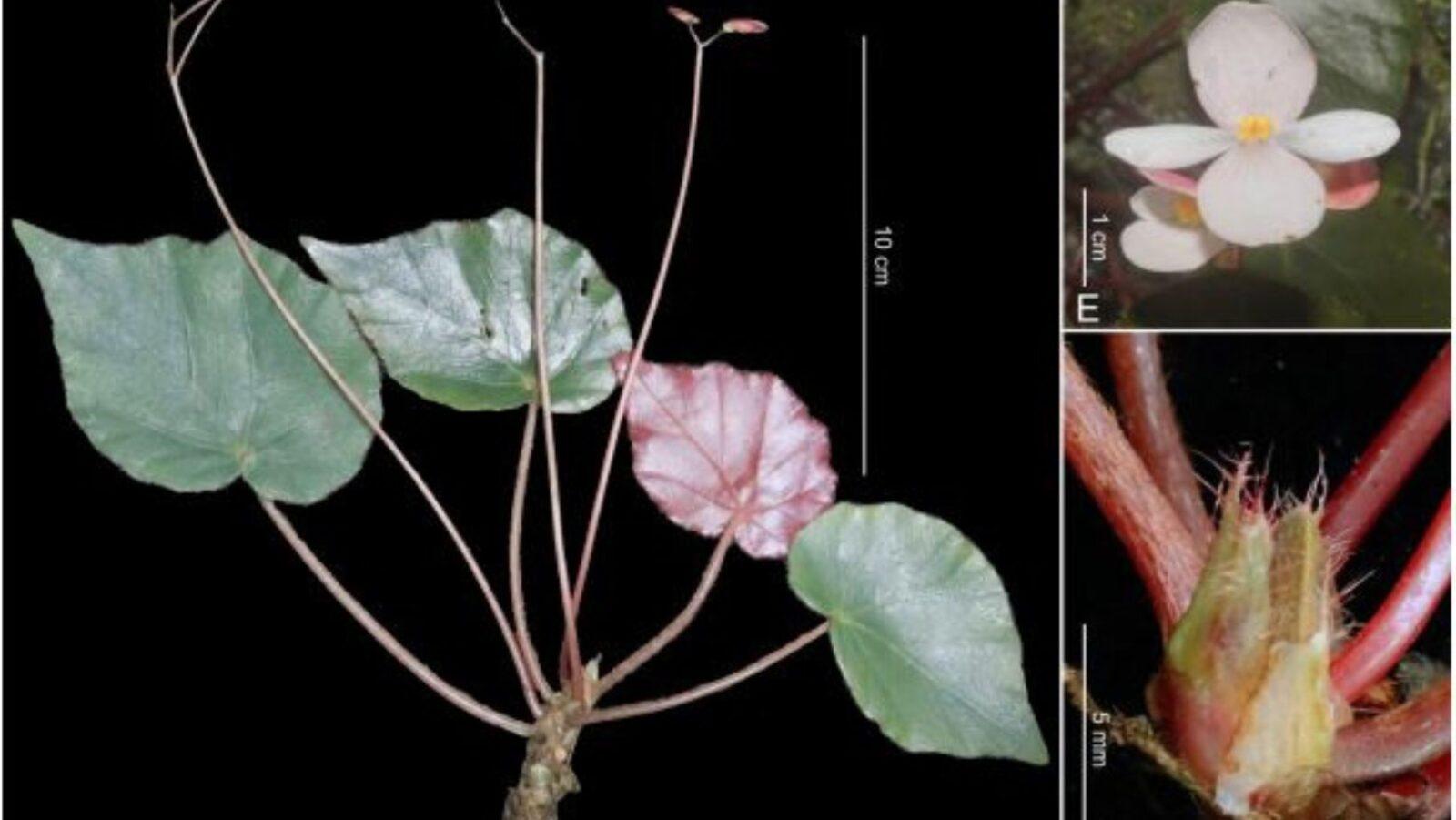

In March 2024, the description of a new species of flowering plant from the Philippines was published in Phytotaxa.
𝘽𝙚𝙜𝙤𝙣𝙞𝙖 𝙩𝙖𝙣𝙖𝙪𝙖𝙣𝙚𝙣𝙨𝙞𝙨
Distribution/habitat: Tanauan City, Batangas, southern Luzon, Philippines
Endemic: Yes
Distinctive traits: 𝘉. 𝘵𝘢𝘯𝘢𝘶𝘢𝘯𝘦𝘯𝘴𝘪𝘴 has a few similarities with a 𝘉𝘦𝘨𝘰𝘯𝘪𝘢 species from eastern Luzon, 𝘉. 𝘤𝘩𝘪𝘯𝘨𝘪𝘱𝘦𝘯𝘨𝘪𝘪. Both plants have light pink flowers, fleshy green leaf blades (laminae), and boat-shaped bracts (leaflike structures), but 𝘉. 𝘵𝘢𝘯𝘢𝘶𝘢𝘯𝘦𝘯𝘴𝘪𝘴 differs from 𝘉. 𝘤𝘩𝘪𝘯𝘨𝘪𝘱𝘦𝘯𝘨𝘪𝘪 in that it has no prominent white midrib and veins on the top side of its leaves. The leaf edges of 𝘉. 𝘵𝘢𝘯𝘢𝘶𝘢𝘯𝘦𝘯𝘴𝘪𝘴 are smooth, unlike 𝘉. 𝘤𝘩𝘪𝘯𝘨𝘪𝘱𝘦𝘯𝘨𝘪𝘪’s, which has tiny hairs. Moreover, the stipules (paired appendages near the leaf base) of 𝘉. 𝘵𝘢𝘯𝘢𝘶𝘢𝘯𝘦𝘯𝘴𝘪𝘴 are only partly keeled (folded along the middle, like a boat), while 𝘉. 𝘤𝘩𝘪𝘯𝘨𝘪𝘱𝘦𝘯𝘨𝘪𝘪’s are prominently keeled. Lastly, 𝘉. 𝘵𝘢𝘯𝘢𝘶𝘢𝘯𝘦𝘯𝘴𝘪𝘴 has no thick and wooly (tomentose) hair covering under its leaves and stalks, which the leaves of 𝘉. 𝘤𝘩𝘪𝘯𝘨𝘪𝘱𝘦𝘯𝘨𝘪𝘪 possess.
𝘉. 𝘵𝘢𝘯𝘢𝘶𝘢𝘯𝘦𝘯𝘴𝘪𝘴 has only been found growing on moist boulders near a waterfall, within a lanzones plantation. It has been observed to bear flowers and immature fruits from February to March and dried capsules in May.
Conservation status: Critically Endangered
Described by: Mark Angelo Bucay, Danilo Tandang, and Kuo-Fang Chung
Etymology: Its species name, 𝘵𝘢𝘯𝘢𝘶𝘢𝘯𝘦𝘯𝘴𝘪𝘴, references its place of origin.
Significance
Aside from its “restricted and severely fragmented distribution,” the existence of 𝘉. 𝘵𝘢𝘯𝘢𝘶𝘢𝘯𝘦𝘯𝘴𝘪𝘴 is also threatened both by human activities (e.g., people bathing or doing their laundry near the area, nearby land conversions) and Taal Volcano’s activity. The description of 𝘉. 𝘵𝘢𝘯𝘢𝘶𝘢𝘯𝘦𝘯𝘴𝘪𝘴 brings hope not just for increased environmental awareness, but perhaps more importantly, for a stronger commitment from all stakeholders — including the government and the general public — to protect and support research efforts in vulnerable areas where these novel species reside.—MF
Reference:





Author: Mikael Angelo Francisco
Bitten by the science writing bug, Mikael has years of writing and editorial experience under his belt. As the editor-in-chief of FlipScience, Mikael has sworn to help make science more fun and interesting for geeky readers and casual audiences alike.