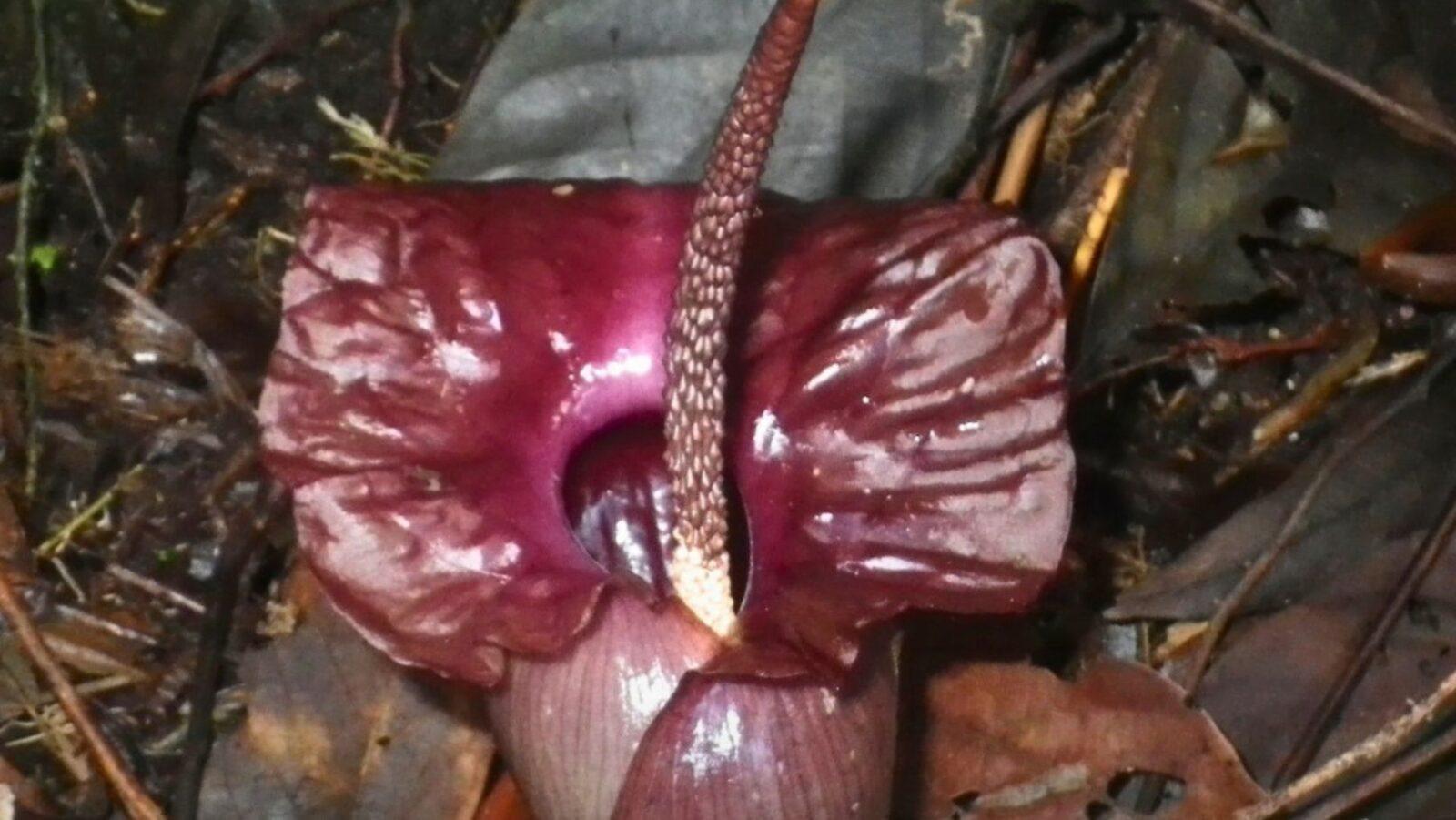
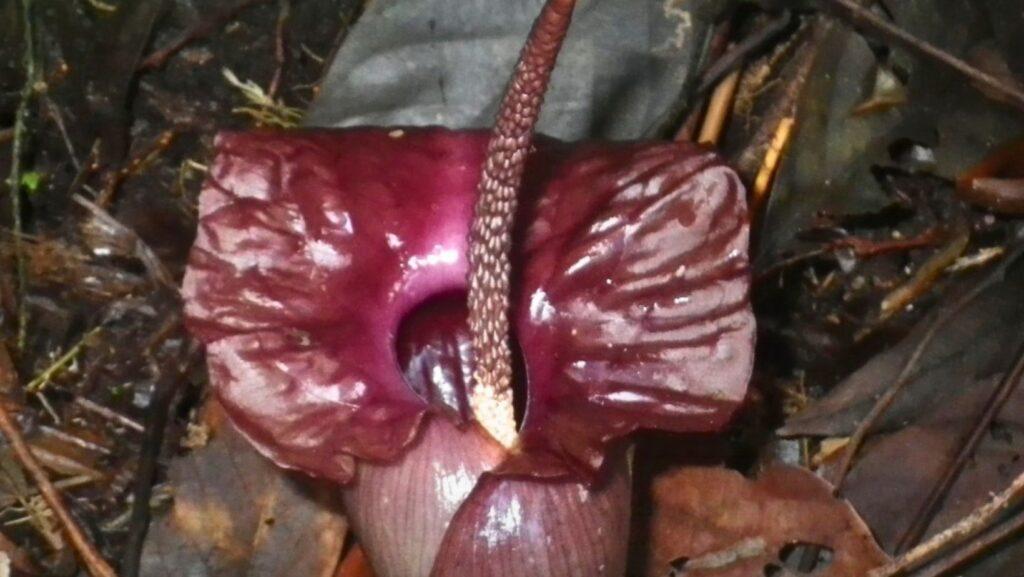
In February 2026, the description of Amorphophallus calladoi, a new endemic species of herbaceous plant from the Philippines, was published by Rene Alfred Anton B. Bustamante, Maverick N. Tamayo, John Paul Collantes, and Pieter B. Pelser in the journal Phytotaxa.
𝘼𝙢𝙤𝙧𝙥𝙝𝙤𝙥𝙝𝙖𝙡𝙡𝙪𝙨 𝙘𝙖𝙡𝙡𝙖𝙙𝙤𝙞 (Araceae)
Distribution/habitat: Aurora and Nueva Ecija, Luzon
Distinctive traits: Amorphophallus calladoi has physical similarities to both A. luzoniensis (an elusive and largely mysterious plant from Cagayan Province that was last collected in 1912) and A. fontarumii (from the Kaliwa Watershed Forest Reserve in Tanay, Rizal). However, based on certain characteristics — including a shorter peduncle (flower-supporting stalk), a shorter spadix (inflorescence or flower cluster), stamens with rounded pores, and a rugose (not smooth; full of folds, wrinkles, or ridges), consistently cylindric appendix — researchers have determined that it is a distinct species. Its flowers are known to bloom in April.
Conservation status: Data Deficient
Etymology: Amorphophallus calladoi takes its name from field botanist John Rey Callado, in honor of his scientific contributions. Callado collected the type specimen of A. calladoi and played a key role in alerting the authors to the existence of this species.
Significance
Collected in 2012 from the forests of Aurora Memorial National Park (AMNP) and also found in nearby areas in the Pantabangan-Carranglan Watershed Forest Reserve (PCWFR) in Nueva Ecija, Amorphophallus calladoi is the 22nd Philippine Amorphophallus species. It was described by researchers from the Philippine Taxonomic Initiative, Texas Christian University, and the University of Canterbury, in collaboration with local conservation agencies. —MF
Reference: Bustamante, R.A.A.B., Tamayo, M.N., Collantes, J.P. & Pelser, P.B. (2026) Amorphophallus calladoi (Araceae), a new species from Luzon Island, Philippines. Phytotaxa 740 (2): 217–222. https://doi.org/10.11646/phytotaxa.740.2.10

Author: Mikael Angelo Francisco
Bitten by the science writing bug, Mikael has years of writing and editorial experience under his belt. As the editor-in-chief of FlipScience, Mikael has sworn to help make science more fun and interesting for geeky readers and casual audiences alike.