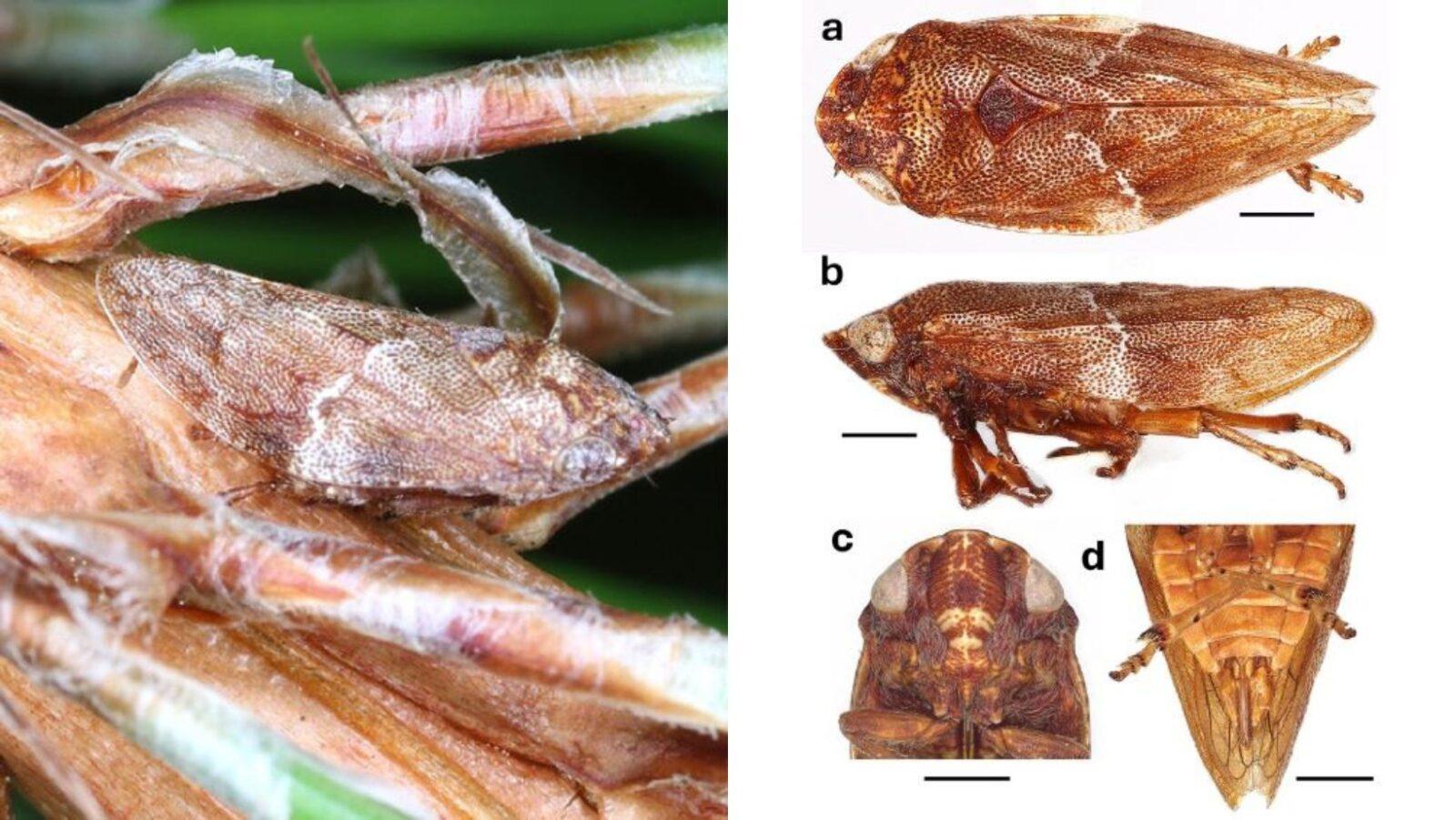
In March 2026, the description of Ariptyelus ikalahani, a new spittlebug species from the Philippines, was published by Vinton Thompson, Elorde S. Crispolon, Jr., and Sheryl A. Yap in The Pan-Pacific Entomologist.
𝘼𝙧𝙞𝙥𝙩𝙮𝙚𝙡𝙪𝙨 𝙞𝙠𝙖𝙡𝙖𝙝𝙖𝙣𝙞
Distribution/habitat: Santa Rosa, Santa Fe, Nueva Vizcaya, Luzon
Distinctive traits: Ariptyelus ikalahani is distinguishable from other known Ariptyelus species in Taiwan mainly due to its body length (7.4 mm or greater) and the diagonal white bands on its tegmina (leathery forewings). Observable morphological differences also set A. ikalahani apart from another Philippine Ariptyelus species, A. auropilosus.
Conservation status: Unspecified
Etymology: Ariptyelus ikalahani was named after the Ikalahan people, who are indigenous to Nueva Vizcaya and adjacent areas.
Significance
Given how previously known Ariptyelus species are in Taiwan, the description of Ariptyelus ikalahani is an important step in understanding how the genus itself — as well as its host plant, Pinus kesiya (Benguet pine or Khasi pine) — reached the Philippines thousands of years ago. Moreover, it highlights the importance of devoting more time and resources toward studying invertebrate diversity in the Philippines, an area of research that, compared to the diversity of amphibians, birds, mammals, and reptiles in the country, has not been explored enough.—MF
Reference: Vinton Thompson, Elorde S. Crispolon, Jr., Sheryl A. Yap “A new species of the spittlebug genus Ariptyelus Matsumura, 1940 (Hemiptera: Cercopoidea: Aphrophoridae) from Luzon, Philippines,” The Pan-Pacific Entomologist, 102(1), 37-49, (31 March 2026)

Author: Mikael Angelo Francisco
Bitten by the science writing bug, Mikael has years of writing and editorial experience under his belt. As the editor-in-chief of FlipScience, Mikael has sworn to help make science more fun and interesting for geeky readers and casual audiences alike.