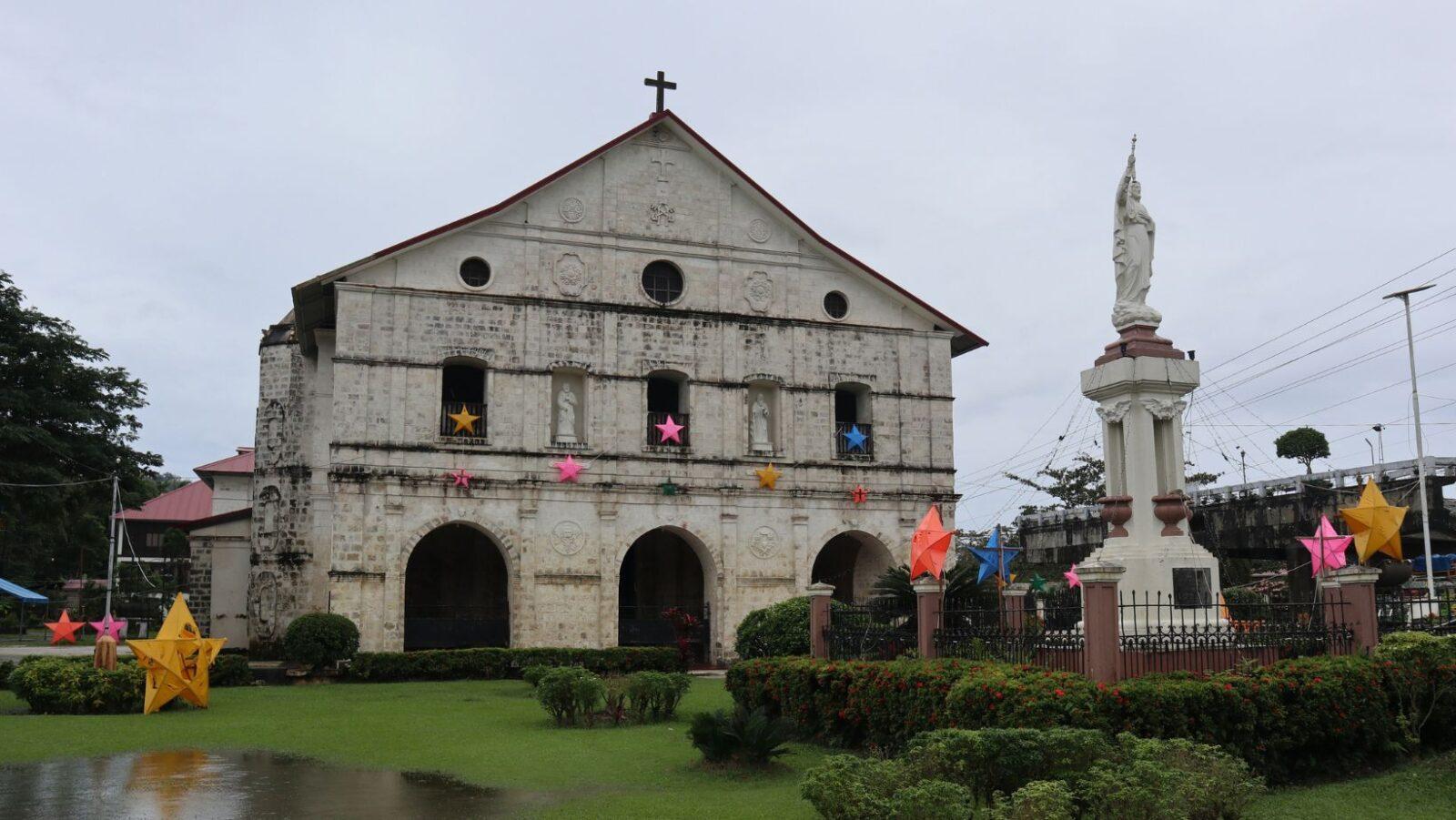
A 2023 photo of Loboc Church post-restoration, following the Bohol earthquake ten years earlier. (Photo: Patrickroque01/Wikimedia Commons)
The Department of Science and Technology-Forest Products Research and Development Institute (DOST-FPRDI) and Bohol Island State University (BISU) have become partners for science-based heritage conservation in Bohol. The initiative seeks to protect and preserve historic structures across Bohol by applying advanced non-destructive testing (NDT) methods and promoting compatible and sustainable conservation materials.
“Heritage conservation is not just about preserving old structures; it is about keeping our history, identity, and culture alive,” shared DOST Secretary Dr. Renato U. Solidum Jr. “Through science-based partnerships like this, we empower local communities to be active stewards of their own heritage.”
For communities in Bohol, heritage structures are more than architectural landmarks, as they are living symbols of faith, identity, and shared history. Many of these structures contain historic wooden elements such as floors, retablos, and structural columns that have endured centuries of natural wear.
According to DOST-FPRDI Director Rico J. Cabangon, preserving these structures requires not only care and commitment, but also scientific expertise, as wood can suffer from decay, termite or fungal attack, and structural weakening that are not immediately visible.
“By equipping local institutions with the right tools and expertise, we help ensure that conservation decisions are evidence-based, sustainable, and rooted in respect for cultural legacy,” shared Cabangon.
In heritage homes like the 195-year-old Casa Rocha, decisions about repair, reinforcement, or replacement of materials must be guided by proper assessment to ensure structural safety while preserving historical authenticity.
DOST-FPRDI and BISU formalized their partnership through a Memorandum of Agreement signing. Prior to this, Institute experts had already trained the BISU EPOCH program team on wood identification, the scientific process of establishing the identity of a wood specimen based on its anatomical, physical, and structural properties.
BISU President Dr. Anthony Penaso acknowledged the vital role of DOST-FPRDI’s technical expertise in preserving the province’s cultural heritage.
“Through this partnership, we further strengthen our conservation initiatives to help secure a sustainable future for Bohol. We reaffirm our commitment to safeguard our rich heritage while empowering students and communities through innovative research and responsible stewardship,” said BISU President Penaso.
The DOST-FPRDI team also conducted site visits to key heritage locations in Bohol, including Casa Rocha, Baclayon Church, Santa Monica Church, Loay Church, and Loboc Church.
The partnership is anchored on the research program “Enhancing Heritage Preservation: Advancing Evidence-Based Conservation Through Advanced NDT and Alternative, Compatible Materials (EPOCH).” It contributes to sustaining the values and conservation goals of the Bohol UNESCO Global Geopark, reinforcing science-based stewardship of the province’s natural and cultural heritage.—Monina Cheska C. de Mesa (DOST-FPRDI)/MF
This partnership is one of the many initiatives of the Department of Science and Technology (DOST) aimed at providing science-based, innovative, and inclusive solutions across four strategic pillars: human well-being, wealth creation, wealth protection, and sustainability. These pillars embody the mantra OneDOST4U: Solutions and Opportunities for All. For more information, visit www.fprdi.dost.gov.ph