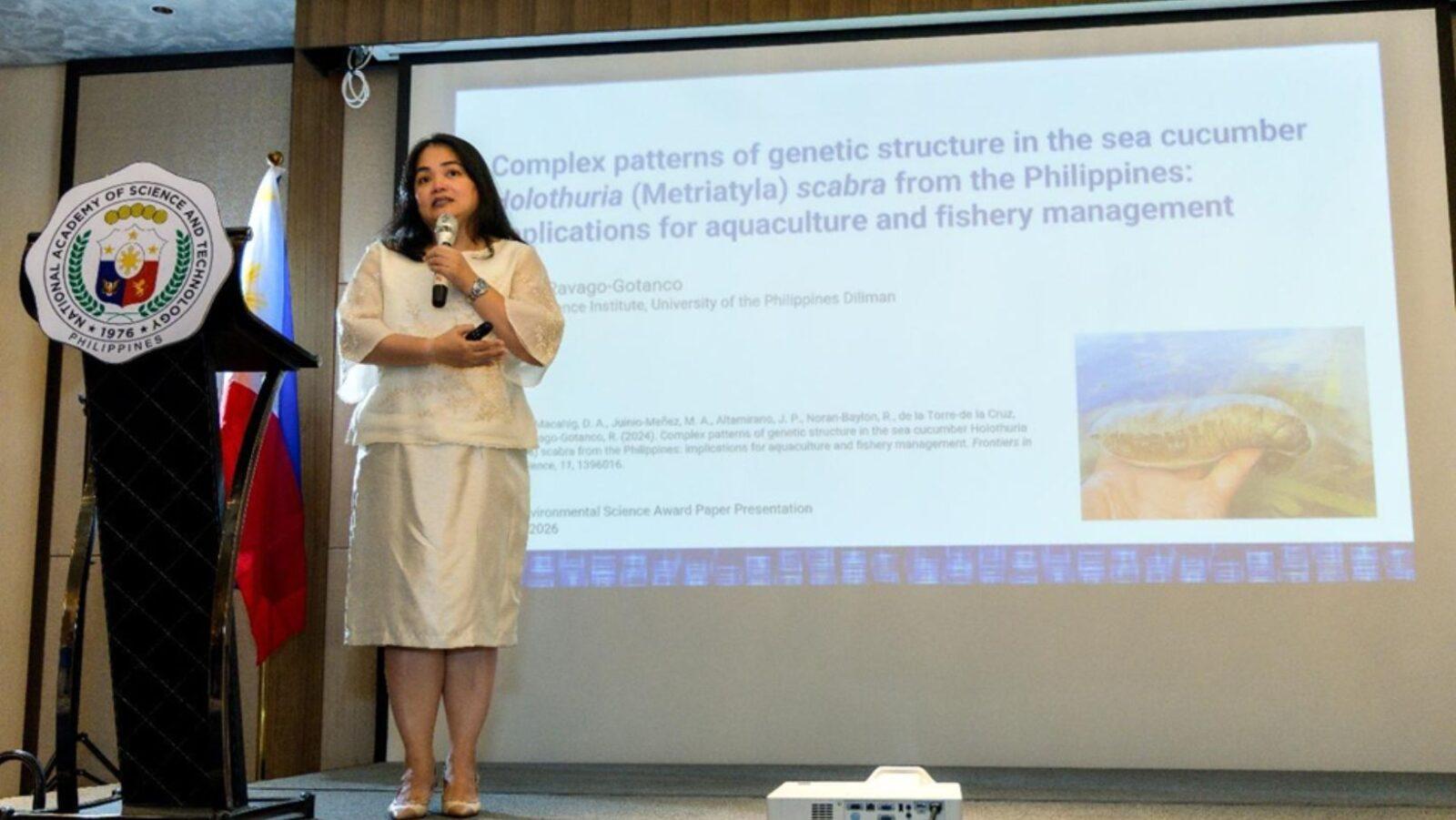
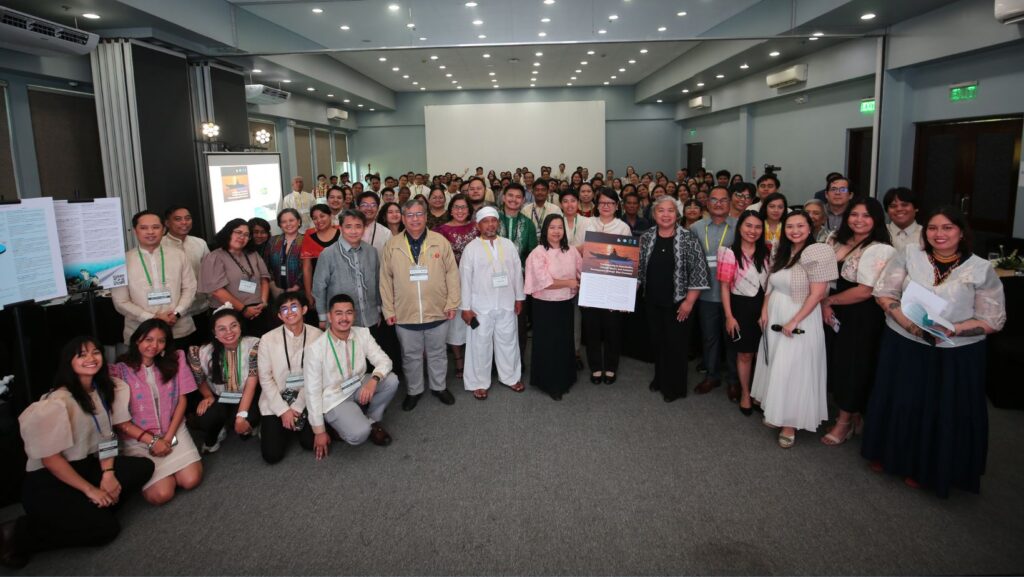
Delegates from government, NGOs, academe, youth, and local communities gathered at the Philippine Mangrove Conference 2026 in Quezon City, underscoring the need to align science, policy, and grassroots action for mangrove conservation and climate resilience. (Photo via Evident Integrated Marketing & PR)
Global Mangrove Alliance Philippines and the Department of Environment and Natural Resources – Biodiversity Management Bureau (DENR-BMB) recently inaugurated the Philippine Mangrove Conference (PMC) 2026, themed “Ensuring Accountable Pathways for Resilient Communities,” at Microtel Technohub in Quezon City by Wyndham UP Technohub from March 24 to 26, bringing together government, academe, civil society, the private sector, youth, and community leaders to align science, policy, and financing for mangrove conservation and restoration.
“Protecting mangroves has become a development priority for a country as vulnerable to climate impacts as the Philippines,” said Dr. Annadel Cabanban, Country Manager, Wetlands International Philippines and Lead Convenor of the Global Mangrove Alliance Philippines. “Aligning interventions across government, communities, scientific institutions, and the private sector with the country’s climate commitments is essential to restore these ecosystems at scale.”
Building on a decade of national dialogue
Since 2012, the Philippines has held four National Mangrove Conferences and a National State of the Mangrove Summit in 2019, each surfacing the same urgent priorities: science-based rehabilitation, coastal zoning, community stewardship, and climate adaptation. Nine policy recommendations carried across all four conferences, yet many remain unimplemented. This year’s conference was convened to take stock, build on what worked, and forge stronger pathways forward.
The Philippines once had approximately 500,000 hectares of mangrove cover — a figure sharply reduced by logging, aquaculture expansion, and coastal development. National data show a partial recovery, with satellite analyses recording roughly 240,824 hectares in 2010 and an increase to approximately 311,400 hectares by 2020, reflecting the gains of sustained rehabilitation and conservation efforts.
Grounding mangrove conservation in local realities
Community stewardship remains central to progress. In Negros Occidental — where 25 of 32 local government units are coastal — mangrove restoration is embedded in local policy, linking conservation directly to community gains: improved fish catch, livelihoods, and ecotourism. “Restoring mangroves is about helping communities live sustainably alongside them,” said Atty. Julie Bedrio, Provincial Environment Management Officer. “With knowledge, resources, and support, mangrove protection becomes stronger and more sustainable.”
The Conference engaged private sector, community, and youth-led organizations — including the Shalom Women’s Biodiversity Conservation Association and Mangrove Matters PH — on their roles in on-the-ground conservation. Imelda Mazo, President of the Shalom Women’s Biodiversity Conservation Association in Coron, Palawan, shared how their work has evolved beyond planting into monitoring and learning alongside scientists. “Conservation is a long-term commitment, like raising a child. It is never simple. Nature-based solutions are, at their core, about science, and we in the community have come to believe that deeply,” she said.
The Conference also featured the launch of the National State of the Coasts (NSOC) 2025 Report, estimating the ocean economy at USD 15 billion or 3.8% of GDP in 2024 — while noting that only 1.42% of Philippine sea area remains under Marine Protected Areas.
The final day of PMC 2026 delivered two landmark moments for blue carbon science and governance. The National Blue Carbon Action Partnership (NBCAP) Roadmap 2026–2030 was formally turned over from ZSL Philippines to DENR, institutionalizing the country’s blue carbon agenda under government stewardship. Alongside it, the Blue Carbon Quantification Protocol (BCQP), which was co-developed by Filipino scientists with DENR and conservation partners, was launched as the country’s first credible, field-applicable carbon accounting framework. Together, both milestones translate the Conference’s science-to-policy ambitions into concrete national action.
Delivering on accountability: Sectoral commitments through 2028
True to its theme, the Conference closed with six sectors pledging concrete, time-bound targets for 2028:
People’s Organizations — Restore and protect local mangrove areas through sustainable livelihoods such as eco-tourism, nursery production, beekeeping, and fish processing.
Academia — Establish provincial mangrove data hubs and a national blue carbon research agenda.
Government Agencies — Develop a unified ocean governance framework integrating mangrove ecosystems and science-based coastal management.
Private Sector — Publish integrated mangrove aquaculture protocols and restore 100 hectares of mangroves through community cohorts.
Local Governments — Expand coastal greenbelt ordinances and embed blue carbon governance into local resource management plans.
Civil Society — Establish new Local Conservation Areas, advance the National Coastal Greenbelt Bill, and secure financing for a GMA Philippines Secretariat.
All commitments will be tracked in future national platforms, making accountability a continuing practice. The Conference aligned national mangrove conservation efforts with the Philippine Biodiversity Strategy and Action Plan, the country’s Nationally Determined Contributions, and the 2030 Agenda for Sustainable Development, reinforcing a shared commitment to protect mangrove ecosystems, coastal livelihoods, and the resilience of future generations.
Guided by the spirit of “Padayon” — a Filipino word for moving forward with purpose despite setbacks — the Conference has set in motion a new chapter of science-driven, community-centered mangrove stewardship.
“This roadmap and these commitments are not the end. They are the beginning,” said Edwina Garchitorena, Lead for ZSL Philippines. “The tools we have built together must now reach the communities and local governments who manage these resources. We call on all partners to sustain this momentum and invest in solutions that work for both people and nature.”—Press release via Zoological Society of London (ZSL) Philippines and Evident Integrated Marketing & PR/MF