
Photo: Pexels
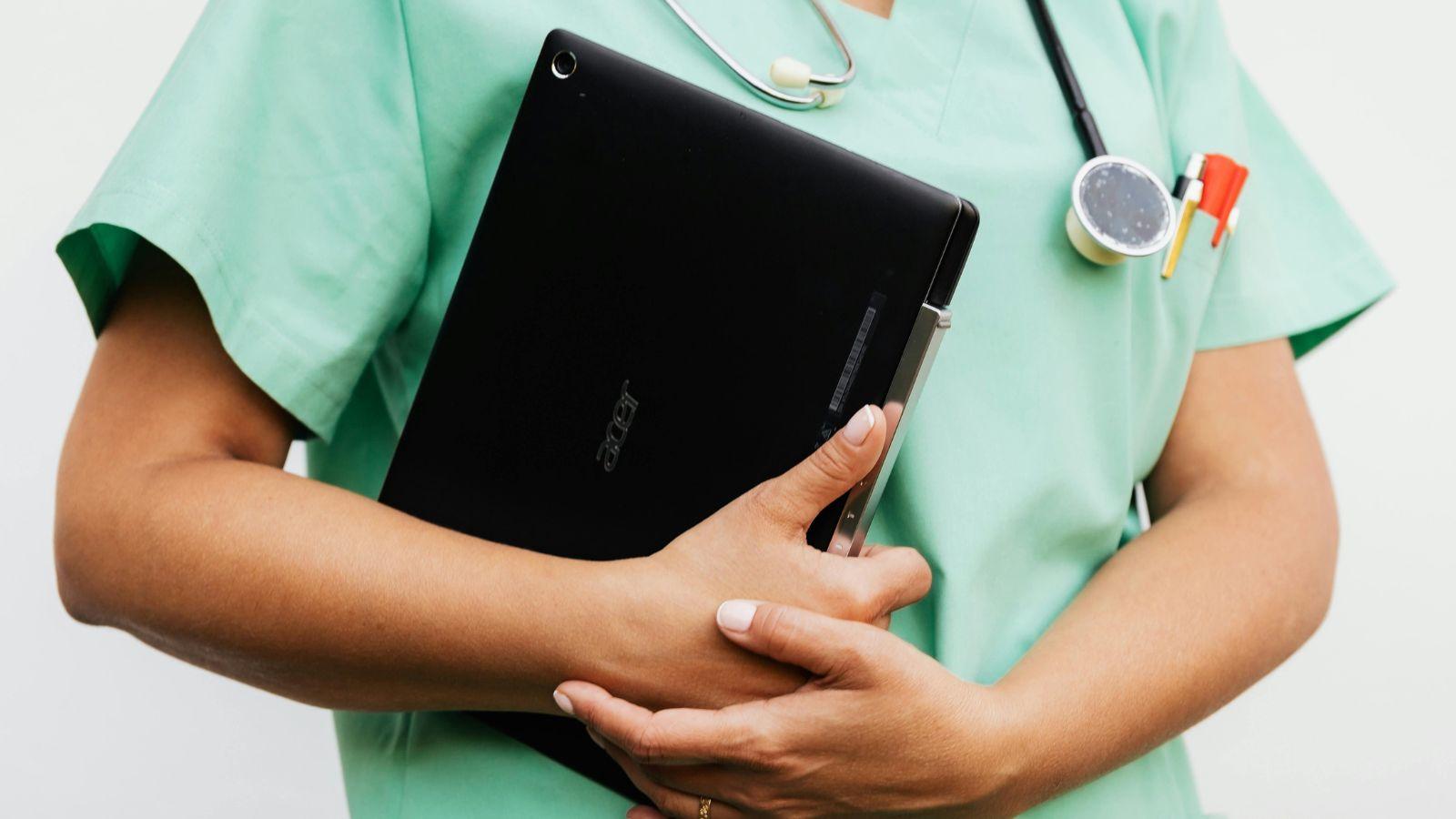
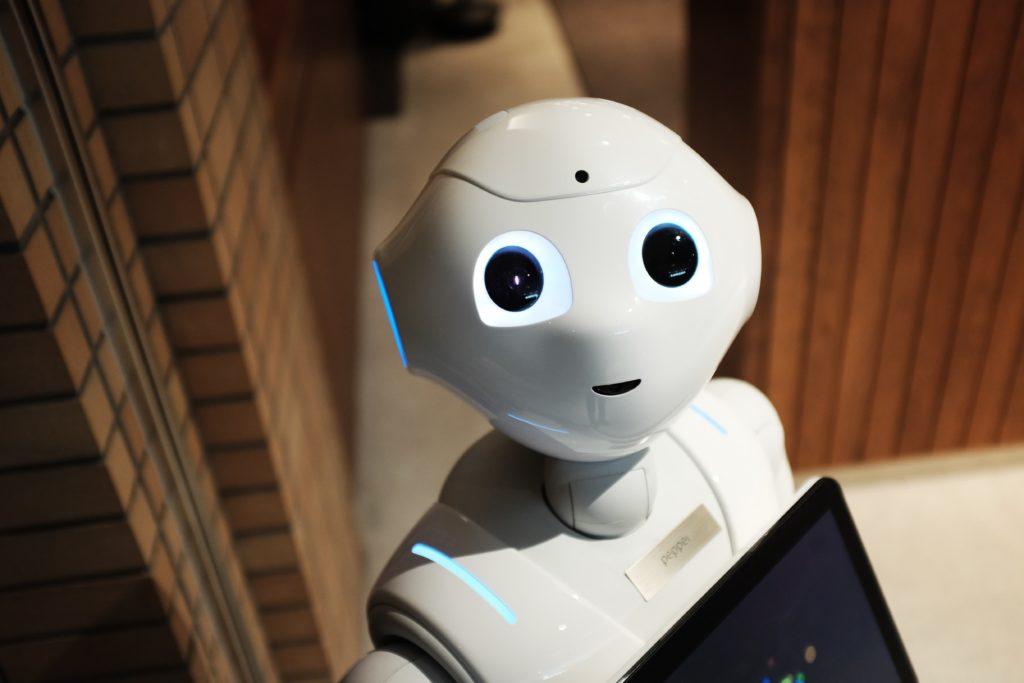
One tracks heartbeats through algorithms, while the other catches them with a steady hand. Artificial intelligence (AI) may master the waves of a beat, but only a nurse understands the rhythm of one.
In a world where innovations rise and are marked by AI in every corner, individual lives become increasingly intertwined with technology’s evolution. This is especially the case when said innovations fall under the healthcare sector. AI models have shown promise in terms of dealing with a person’s health, especially when it comes to disease detection and effective interventions. Machine learning models, for instance, have demonstrated potential in the interpretation of medical imaging, enabling the early detection of diseases such as cancer.
In a 2024 essay, Dr. Hae-Kyung Jo of Korea’s Jeonju University observed that AI has become increasingly prevalent in the medical industry, including the Korean government’s implementation of “an AI support project to assist public medical institutions in introducing and utilizing medical healthcare solutions and services.” While the application of AI in healthcare has been studied for years, AI health technologies (AIHTs) have only recently become more commonly used in the medical industry due to advancements in algorithms, processing capacity, and the continuously growing amount of data available for every patient.
But the personal touch that characterizes nursing care — a component necessary for productive patient interactions and recovery — is absent from these technological wonders.
While AI helps with administrative and data-driven decision-making, it lacks the emotional intelligence and nuanced understanding that are essential to nursing care — that are essential to a nurse. Advances in medical technology may enhance diagnostic accuracy, but its capacity does not match what nurses have and what they can provide in a person’s most vulnerable time: empathy and compassion, the undisputed masters of both the art and the science of nursing.
In an interview with Adelyn Saddalani Dequico, RN, MHcA, SOCCSKSARGEN General Hospital’s Supervising Administrative Officer, she emphasized the significance of transcending task completion when it came to patient care, especially in a fast-paced setting such as in the emergency rooms of hospitals. “It may be a sign of improvisation and smarts when it comes to technology, but it is not a sign of creating an effective connection between a nurse and a patient,” she stated. “Technology may be smart, but nurses are smarter and much more empathetic.”
AI has the potential to decrease administrative workloads in the healthcare industry, allowing nurses to focus more on patient-centered care. Artificial intelligence-powered chatbots and virtual health assistants are examples of innovative solutions that can improve scheduling and documentation procedures, increasing systemic efficiency in healthcare. However, the significance of the human touch in nursing should never be overshadowed by technical innovation.
Maintaining a balance between technological advances and the fundamental human element of nursing will be integral as the healthcare environment changes due to the development of AI. Nurses carry an essential function in providing not only care but also compassion, and while AI may significantly support and enhance care, it is unable to replace healthcare individuals. A program or a piece of metal may help alleviate pain — but it is the heart of a human that heals.—MF
Editor’s note: The views and opinions expressed in this piece are solely those of the individual author.
Ericka Saddalani is a 4th year BS Nursing student from the University of the Immaculate Conception in Davao City. Saddalani wrote this story as a participant of “From Data to Daily Life: Writing Science and Technology Stories for People,” a science journalism workshop conducted on February 2, 2026 at the Holy Cross of Davao College (HCDC) in Davao City, through the Institute of Peace Communication Studies (IPCS) under the Center for Social Communications and Alumni Affairs (CSCAA) and in partnership with MindaNews.
References:
- Jo, H. (2024). Why nursing cannot be replaced with artificial intelligence. Women S Health Nursing, 30(4), 340–344. https://doi.org/10.4069/whn.2024.12.12
- Van Bulck, L., Couturier, R., & Moons, P. (2023). Applications of artificial intelligence for nursing: Has a new era arrived? European Journal of Cardiovascular Nursing, 22(3), e19–e20. https://doi.org/10.1093/eurjcn/zvac097