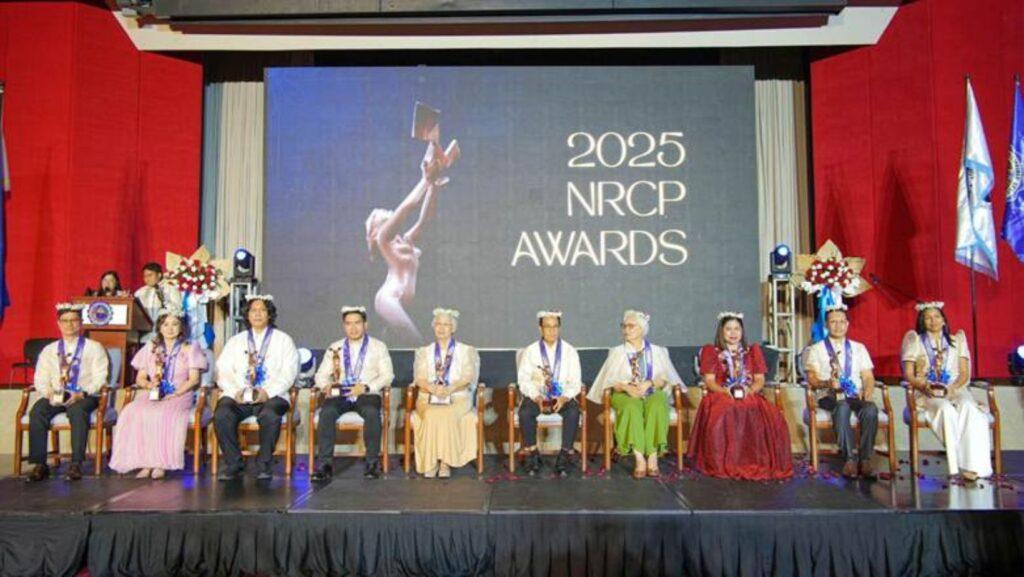
The 2025 NRCP awardees (from L-R): Dr. Aurelo A. De Los Reyes, Dr. Leslie Michelle M. Dalmacio, Dr. Dennis V. Umali, Dr. Aries A. Arugay, Dr. Marita V. Tolentino-Reyes, Dr. Ramon A. Razal, National Scientist Lourdes J. Cruz, Dr. Katherine Ann C. Israel, Dr. Charlie S. Veric, and Dr. Jillian Aira Gabo-Ratio, received their “putong,” a DOST-NRCP tradition of crowning awardees with a floral wreath symbolizing honor, gratitude, and high esteem of the scholarly. Awardees not in photo: Dr. Mark Angelo O. Belndres, Dr. Gisela P. Concepcion, and Dr. Ramon Christian P. Eusebio. (Photo: DOST-NRCP)
Thirteen Filipino researchers from various fields were given the spotlight during the Department of Science and Technology – National Research Council of the Philippines’ (DOST-NRCP) 2026 Annual Scientific Conference (ASC) and 93rd General Membership Assembly (GMA) at the Philippine International Convention Center, Pasay City, March 13.
Highlighting their contributions to national development, the council recognized eight achievement awardees, three member emeriti, and two service awardees.
One of the awardees is Dr. Aurelio A. de los Reyes in mathematical sciences, whose work focuses on infectious disease modeling by translating biological processes into dynamical systems and equations.
“We are trying to solve it (health problems) numerically or mathematically, and hopefully, potentially, it could impact policymaking to have a better public health response,” Dr. de los Reyes said.
Medical sciences awardee Dr. Leslie Michelle M. Dalmacio and chemical sciences awardee Dr. Katherine Ann C. Israel both emphasized improving health and nutrition through the use of local food and produce.
Dr. Dalmacio underscored that obesity has increasingly affected Filipinos, hence her research on improving nutrition through Philippine fermented food and its effects on gut microbes.
Meanwhile, Dr. Israel advocated the use of indigenous berries, such as bignay, lipote, and duhat, and explored their antioxidant properties to provide benefits “beyond nutrition and help prevent noncommunicable diseases.”
In the field of veterinary medicine, Dr. Dennis V. Umali highlighted his work addressing outbreaks with molecular epidemiology in animals, particularly from the poultry industry, which helped inform recommendations similar to his recent role in the national initiative of vaccination against bird flu in 2023.
Geologist Dr. Jillian Aira Gabo-Ratio, on the other hand, explained that there is a need to have a strong scientific foundation and comprehensive information with regard to the metallic deposits in the Philippines.
“We work with industry partners… government agencies and local stakeholders so that together we can hopefully make [mining practices and exploration practices for national resource management more sustainable],” Dr. Gabo-Ratio shared.
In social sciences and humanities, awardees Dr. Aries A. Arugay and Dr. Charlie S. Veric have drawn focus on the socio-political landscape of the country and how it affects its development.
Dr. Arugay presented his studies on the “diseases of democracy,” comparing Philippine politics with those of other democratic countries such as Venezuela and Bolivia, as well as assessing electoral disinformation during recent national polls.
“[I try to] reconstruct the history (Philippine independence from the Americans) so that our cultural memory is going to be stronger. […] A strong economy will have to depend on a strong culture, because it is culture that bonds us. It […] gives us memory, it pushes us forward,” Dr. Veric said.
Meanwhile, member emeritus awardee Dr. Ramon A. Razal of agriculture and forestry underscored his work advancing research, including initiatives such as the Philippine Forestry Education Network (PFEN) and strengthening the presence of DOST-NRCP in the regions.
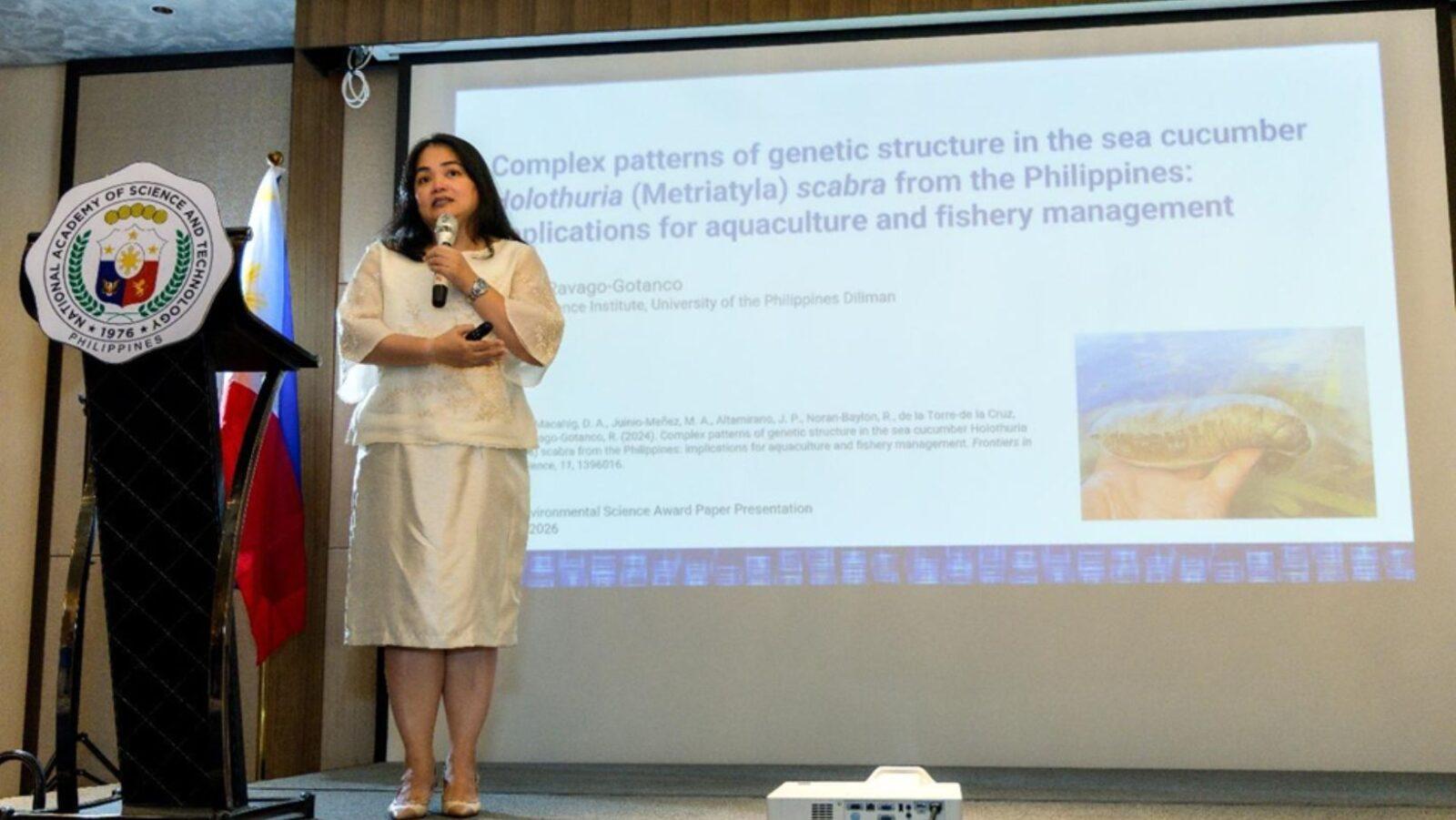
Similarly, Dr. Marita V. Tolentino-Reyes took pride in establishing the “Philippine National Health Research System” in 2013 and eventually institutionalizing research ethics committees across the regions, reaffirming that the Philippines has a “bright research ethics system.”
National Scientist Lourdes J. Cruz, in addition, stressed that research should be inclusive and help communities solve the crises they face.
“We were giving it [research] to the community. [Whatever expertise,] as long as you can help, then you can work together with the community,” said the national scientist.
The NRCP Awardees received trophies, a plaque of recognition, and the council’s traditional putong — a floral wreath of honor — alongside cash prizes worth Php 50,000 for both achievement awardees and member emeriti, and Php 40,000 for service awardees.—Karl Jerome M. del Mundo (Press release via DOST-STII)/MF
Part of the 2026 ASC and 93rd GMA, the 2025 NRCP Awards recognizes their work on advancing knowledge, strengthening the research community, and contributing to the nation’s progress through scientific inquiry and scholarly excellence. The 2025 NRCP Awards is one of the many initiatives of the DOST aimed at providing science-based, innovative, and inclusive solutions across four strategic pillars: human well-being, wealth creation, wealth protection, and sustainability. These pillars embody the mantra OneDOST4U: Solutions and Opportunities for All. For more information, visit www.nrcp.dost.gov.ph