Climate change is real, and it cannot be solved by mere tree-planting activities that end up only as photo documentation. It demands real solutions, not ghost projects. When development is framed solely for the benefit of the economy at the expense of the environment, what does it look like? When forests are converted into subdivisions and sacred mountains are transformed into mining sites, what will be left as playgrounds for the kids? When communities are displaced, people put at risk, and large-scale mining corporations take ownership and become supreme while communities become squatters on their own land—where do we stand? These are all realities on the ground, questions left hanging that no one dares to talk about. These realities continue to grow and poison the very foundation of our being. While issues on ghost flood control projects remain on the table, those involved are still not behind bars, enjoying the comfort that comes from the sweat and blood of the Filipino people.
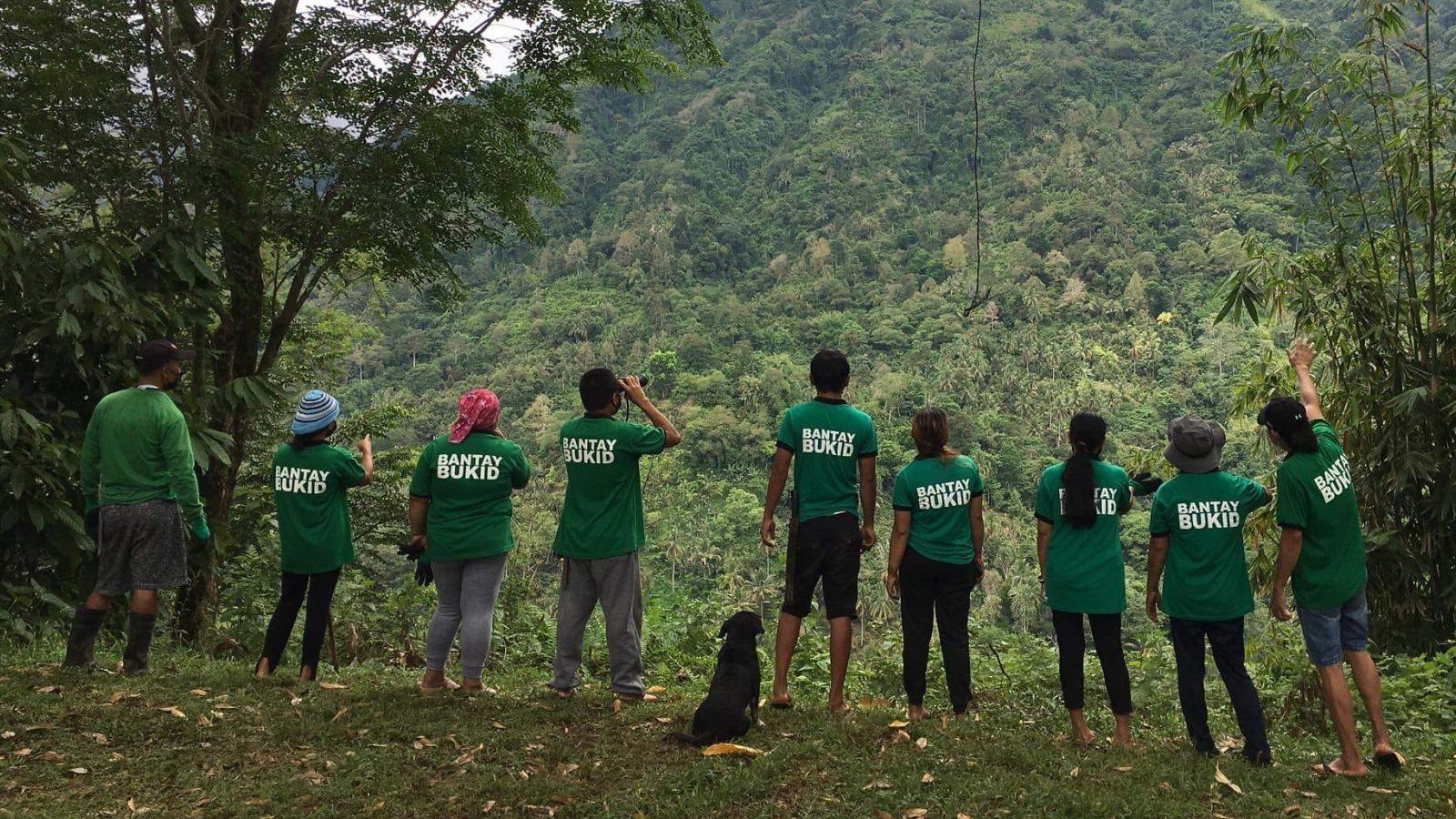
But in the headwaters of Davao City, there is a flood control project that is not a ghost project, but a community-led conservation effort: the riverbank restoration initiative of the Bantay Bukid Volunteers through the Adopt-A-Riverbank Program of the Interfacing Development Intervention for Sustainability (IDIS), an NGO based in Davao City.
The Bantay Bukid Volunteers are leading ecological restoration efforts in these areas to protect and preserve vital watershed zones such as the Panigan-Tamugan Watersheds, the next source of Davao City’s drinking water. The environmental benefits of this community-led effort include restoring the natural landscape and biodiversity of river ecosystems, enhancing the quality of river water (since plants and their roots trap chemical residues and soil sediments coming from the mountains, agricultural areas, industrial plants, households, and many others). It also restores the natural flow of the river, minimizes surface run-off, reduces the risks of soil erosion, landslides, and liquefaction, and improves the local microclimate.
But will policymakers and communities sufficiently act to safeguard these vital ecosystems?
In the Philippines, the flood control program was once envisioned as a shield against nature’s wrath. It was supposed to embody the government’s duty to protect its people. Instead, it has become a trillion-peso betrayal, where the deluge is not from the sky but from corruption itself. What was supposed to be a lifeline has turned into a scandal that erodes public trust and undermines the very purpose of governance. Instead of protection, investigations revealed ghost projects, unfinished works, and funds diverted into private pockets. Citizens were left vulnerable, betrayed by the very institutions meant to serve them.
Yet, there remains a path forward. The better way to fight floods is not through endless contracts and concrete that too often fuel corruption, but through the living resilience of nature and the collective effort of communities. This truth has already been proven by the Bantay Bukid Volunteers, whose initiative demonstrates how community-led efforts can restore waterways, strengthen natural defenses, and rebuild trust. There is no reason not to consider such models. When citizens and ecosystems work hand in hand, flood control becomes not a scandal, but a shared triumph.—MF
Editor’s note: The views and opinions expressed in this piece are solely those of the individual author.
Welmer T. Bagus is a 4th year BS Community Development student at the University of Southeastern Philippines – Mintal Campus in Davao City. Bagus wrote this story as a participant of “From Data to Daily Life: Writing Science and Technology Stories for People,” a science journalism workshop conducted on February 2, 2026 at the Holy Cross of Davao College (HCDC) in Davao City, through the Institute of Peace Communication Studies (IPCS) under the Center for Social Communications and Alumni Affairs (CSCAA) and in partnership with MindaNews.
References:
- ABS-CBN News. (2025, September 11). A timeline of the Philippine flood control scandal. ABS-CBN News. https://news.abs-cbn.com/nation/09/11/25/a-timeline-of-the-philippine-flood-control-scandal (news.abs-cbn.com in Bing)
- Inquirer.net. . (2025, October 3). Billions lost in PH flood control projects expose deep systemic corruption. Inquirer News. https://newsinfo.inquirer.net/1900000/billions-lost-in-ph-flood-control-projects-expose-deep-systemic-corruption (newsinfo.inquirer.net in Bing)
- Inquirer Opinion. (2025, October 10). The PH flood control scandal and the path to social transformation. Inquirer Opinion. https://opinion.inquirer.net/174000/the-ph-flood-control-scandal-and-the-path-to-social-transformation (opinion.inquirer.net in Bing)
- Rappler. (2025, November 5). Recap: Billions lost to ghost flood projects. Rappler. https://www.rappler.com/newsbreak/recap-billions-lost-ghost-flood-projects-corruption-senate-probe (rappler.com in Bing)
- Rappler. (2025, November 12). Flood control corruption: How much money has been recovered? Rappler. https://www.rappler.com/newsbreak/iq/flood-control-corruption-how-much-money-recovered (rappler.com in Bing)
- Interfacing Development Interventions for Sustainability (IDIS). (2024). Bantay Bukid program. IDIS Philippines. https://idisphil.org/bantay-bukid (idisphil.org in Bing)
- Interfacing Development Interventions for Sustainability (IDIS). (2024). Save our watersheds: Stop the onslaught of corporate farms in Davao. IDIS Philippines. https://idisphil.org/save-our-watersheds-stop-onslaught-corporate-farms-davao (idisphil.org in Bing)
- SunStar Davao. (2024, June 15). Bantay Bukid volunteers plant 17K trees to protect riverbanks. SunStar Philippines. https://www.sunstar.com.ph/article/167-bantay-bukid-volunteers-plant-17-k-trees-to-protect-riverbanks (sunstar.com.ph in Bing)