Photo: Sony Pictures Releasing International
[Mild spoiler warning: This article mentions and discusses light plot elements from the source novel.]
Have you ever pulled off a Hail Mary? Tracing its roots to 1920s university football (and gaining mainstream popularity after a 1975 NFL game), a Hail Mary refers to when a player makes a difficult, desperate, last-minute pass (a prayer to the heavens, so to speak) in a buzzer-beating attempt to score. Nowadays, we use the expression in situations involving an all-in, last-ditch effort to snatch victory from the jaws of defeat. Like, for instance, if the world’s greatest scientific minds had to rapidly build a spacecraft to save our planet from extinction.
In 2021, sci-fi author Andy Weir released “Project Hail Mary,” a book framed around an impending Earth-ending solar catastrophe, but focused on the unexpected friendship between two beings from literally different worlds: a science teacher named Ryland Grace and a multi-limbed alien named Rocky. “Andy Weir wrote it in such a way that if you’re really into this stuff, almost every chapter is compelling and this is exactly why others have been describing it as ‘hard to put down’ — you just want to keep on reading,” Rodion Herrera, an astronomy enthusiast and Head of Research And Development at Vibrant Drones, told FlipScience.
Having written the commercially successful novel “The Martian” a decade earlier, Weir is certainly no stranger to weaving science concepts into fictional narratives. “Andy Weir really leans into ‘hard’ science like orbital mechanics, radiation, and relativity, and the plot moves forward because someone is trying to solve a scientific problem,” shared analog astronaut and space nutritionist Kristine Jane Atienza. “As a space nerd, that’s just fun to read.”
A film adaptation of the bestselling novel is set to hit Philippine theaters in 2026 — and aside from being another fascinating addition to the pantheon of big-budget sci-fi films, “Project Hail Mary” also presents an interesting opportunity to explore the scientific concepts in the novel and how the filmmakers showcased them on the silver screen.
‘Staging’ the science, not ‘simplifying’ it
In a work like “Project Hail Mary,” science and story are inseparable. For some storytellers, this may make translating the book into film a Herculean task. But this is precisely what drew directors Phil Lord and Christopher Miller — a pair of filmmakers with extensive experience in imaginative storytelling, as seen in “The LEGO Movie” and “Spider-Man: Into The Spider-Verse” – to the project.
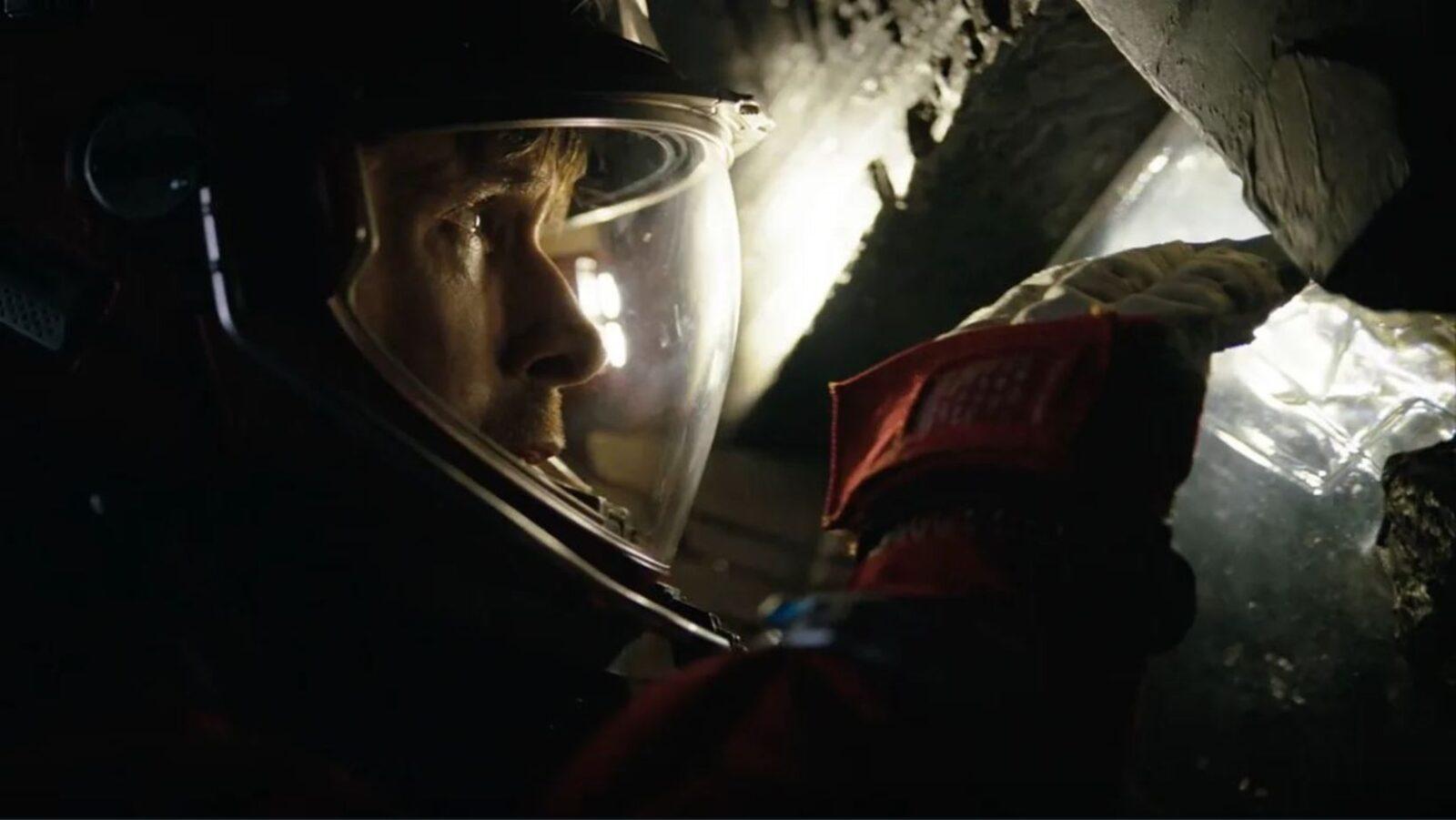
Specifically, they made it a point to stage the science, not reduce it; to embody it, not simplify it. With this in mind, the team worked with screenwriter Drew Goddard to ensure that certain portions of the novel are communicated in the film through actions and visual storytelling instead of just exposition. For example, instead of just hearing about how Grace (Ryan Gosling) solves a problem, the audience would actually see him go through the process of trial and error. “One of the things we learned on ‘The Martian’ was that we don’t have to simplify the science,” Goddard explained in a press release. “We were terrified we would have to simplify it for a general audience, but what we found was the opposite. The audience loved that the science was complicated and challenging.”
Highlighting the science in “Project Hail Mary” instead of downplaying it also seems like a smart move, considering how science itself is almost like a character in the story. “In a lot of space science fiction, there’s an alien enemy or some antagonist to fight, [but] in this story, the ‘enemy’ is really physics and the universe itself,” observed Atienza. “It’s classic man vs. problem. It’s just Grace and Rocky, two nerds trying to outthink the laws of nature.”
Bringing the Hail Mary (and the cosmos) to the silver screen
At the core of “Project Hail Mary” — and where many important plot developments understandably take place — is the titular spacecraft. In their desire to effectively represent the gravity (pun fully intended) of the situation in the novel, the filmmakers worked with experts in the fields of both production design and space science to create not just the Hail Mary itself, but also depictions of space and stars grounded in real astrophysics.
Regarding the Hail Mary spacecraft, Lord and Miller sought to answer one question: “If humanity truly built a ship to save itself, what would it look like?” Because the ship was designed by scientists and engineers from different nations under severe time pressure, each of the Hail Mary’s capsules looks like a different nation designed and built it (unlike how most sci-fi spacecraft have unified, similar-looking interiors). Moreover, the production design team leaned heavily into the use of fabric and insulation as structural elements of the ship. Even the fact that the Hail Mary’s different parts operate under different gravitational states was factored into the set design, so they created sets with the capacity to rotate and reorient.
According to visual effects supervisor Paul Lambert, the “Project Hail Mary” team consulted with NASA scientists and image specialists to create stunning yet plausible cosmic environments. “We don’t truly know what should be out there, but the goal was to keep the science as believable as we could.”
Another way “Project Hail Mary” differs from other sci-fi space films: instead of maintaining the typically cold and emotionally distant vibe, the filmmakers opted for a “warmer and more humanistic” visual temperature. They also relied primarily on a handheld, single-camera shoot instead of a green screen, meaning they had to create the correct lighting as they were shooting (via LED backgrounds) instead of correcting the lighting in post-production.
Out-of-this-world ideas
Both Herrera and Atienza praised the source material for its uncommon yet alluring science-based ideas.
The story of “Project Hail Mary” kicks off as an amnesiac Grace wakes up aboard the Hail Mary, which means the audience learns about the protagonist and his mission alongside Grace himself. “I believe that it was clever of [Weir] to write it ‘in reverse,’ with Dr. Grace already deep into the mission and with a convenient excuse to weave in the rest of the story — temporary amnesia,” said Herrera.
“As an analog astronaut, a lot of the research we look at for long missions right now is very focused on psychology: on how humans deal with isolation, confinement, and extremely long travel times,” Atienza said. “So the idea of putting astronauts into a medically induced coma is risky, but it’s also a really interesting concept to think about for interstellar missions.” She also noted how certain aspects of the story presented “a cool intersection of biology, physics, and space exploration.”
According to Herrera, without going too deeply into spoiler territory, the book’s most compelling idea is “the nature of the organisms that basically give humanity (and the rest of the living organisms within that section of the galaxy) the very problem that the story is trying to solve.”
Meanwhile, Atienza describes Rocky — and how the organism establishes a connection with Grace — as “a refreshing take” on how we visualize aliens. “I always think about this when people imagine aliens looking like humans with slightly bigger heads. Even on Earth, we have intelligent species that evolved completely differently from us, like dolphins. So imagining an intelligent alien that communicates in tones and vibrations and then figuring out how to build a shared language using science was fascinating to me.”
Inspiring curiosity (and future scientists) through science fiction
For Herrera, “Project Hail Mary” is a story that tickles your brain while tugging at your heartstrings, even if you don’t have the chemistry or molecular biology expertise necessary to understand some of its science-based concepts. “Weir had to somehow accept the fact that a portion of his audience will suffer such frustrations, too, but he then has to balance that out with moments of wonder and joy and sorrow, that would trigger emotion and thus remind the reader that yes, this is a story and it yearns to stir your emotions too, not only your intellect.”
“I think this book does something very difficult: It makes extremely complex science feel accessible without losing the excitement of the story,” said Atienza, who stressed the value of creativity and fiction in inspiring future scientists. “Many people become interested in space because of stories first, and then they pursue the science behind them later. A lot of people and friends I know in the space community around the world have been inspired by ‘Star Trek’ [and similar works], and they are now pursuing [space science and technology] right at this moment.
“[Science fiction] makes readers think, ‘Okay, this might not be possible today, but the science behind it isn’t completely out of nowhere.’ And I think that’s what makes stories like this both engaging and inspiring for people interested in space.”
Distributed by Columbia Pictures Philippines, “Project Hail Mary” opens in Philippine cinemas on March 18, 2026.
References:
- https://www.youtube.com/shorts/V-iaDWUwD2M
- https://www.smh.com.au/culture/movies/weir-science-from-the-martian-to-project-hail-mary-this-geek-gets-it-right-mostly-20260310-p5o94j.html
- https://www.profootballhof.com/news/2000/12/news-chat-transcript-with-roger-staubach/
- https://fanbuzz.com/nfl/roger-staubach-hail-mary/
- https://thetablet.org/the-catholic-school-roots-of-footballs-iconic-hail-mary/
- “PROJECT HAIL MARY Production Notes” (via Columbia Pictures Philippines)

Author: Mikael Angelo Francisco
Bitten by the science writing bug, Mikael has years of writing and editorial experience under his belt. As the editor-in-chief of FlipScience, Mikael has sworn to help make science more fun and interesting for geeky readers and casual audiences alike.